
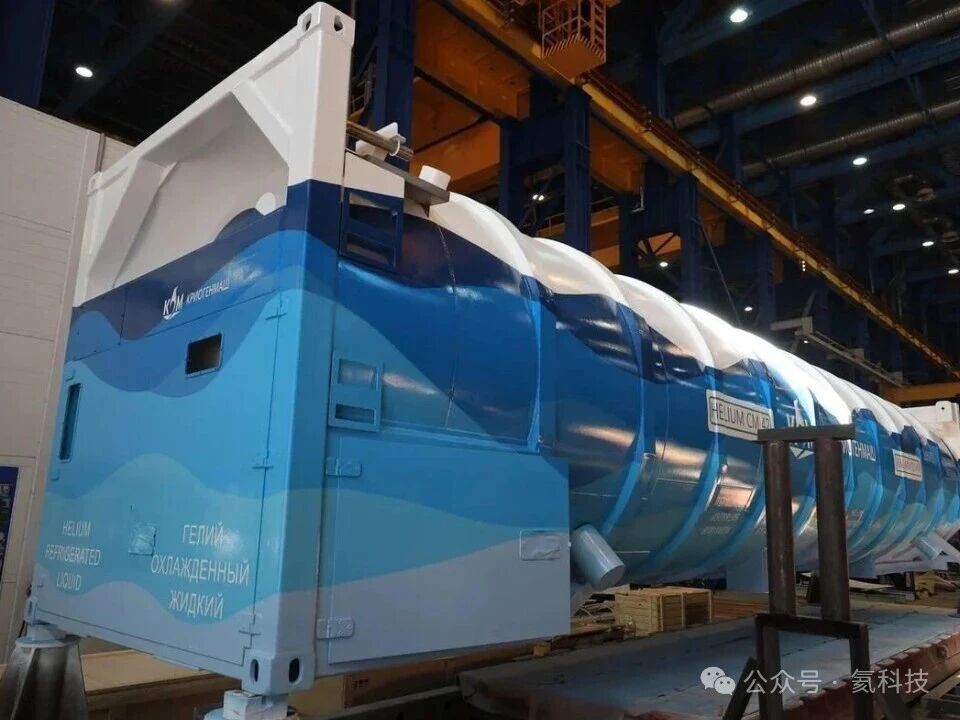
Cryogenmash’s HELIUM CM 42 project is intended for temporary storage and multimodal transport of liquid helium. On 31 March 2025, the Russian Maritime Register of Shipping (RS) announced approval of the container’s technical-documentation package. That is the specific approval milestone described in the RS announcement.
Published design parameters
- Helium payload: 4,540 kg.
- Product temperature: approximately −269 °C.
- Insulation: vacuum multilayer insulation with a nitrogen shield.
These parameters are described in the March 2025 RS publication. In its 10 October 2024 project announcement, Cryogenmash also stated a target of at least 45 days of storage without venting. The same announcement scheduled prototype manufacture and certification for 2025.
How to read the holding-time figure
The 45-day figure is a published development target. It should be assessed alongside the test conditions and operating documentation. For a planned shipment, useful questions include the initial filling condition, allowable pressure rise, nitrogen-shield servicing and the contingency allowance for transit delays. A headline holding time alone does not define an acceptable route.
Remote monitoring and approval scope
The March announcement envisaged installation of the CGV-1 telematics unit to record operating parameters and transmit data to server infrastructure. RS separately announced type approval for that device on 13 February 2025. Approval of the monitoring device and approval of the tank-container documentation are distinct records.
The primary announcements reviewed for this briefing do not establish the start of serial production or current delivery volumes. Those points require a later manufacturer statement or project-specific records.
SG Trading’s procurement perspective
For buyers, the practical next step is to request the current approval documents, acceptance-test results, operating limits and confirmed delivery schedule for the equipment being offered. Monitoring specifications should also identify the measured parameters, reporting interval, coverage limitations and responsibility for responding to alerts.
For related planning guidance, see our cryogenic insulation guide, transport-equipment inspection guide and liquid helium RFQ checklist.