Cylinders
Technical gases, specialty grades and smaller-volume requirements.
Packaging and supply formats
Packaging affects quantity, handling, documentation, delivery and commercial feasibility.
Final suitability and availability are confirmed for the particular gas, grade, volume and destination.
Technical gases, specialty grades and smaller-volume requirements.
Connected cylinders for recurring or higher-volume gaseous supply.
Insulated vessels for cryogenic liquid handling and delivery.
Bulk cryogenic transport subject to product, route and infrastructure.
Large-volume gaseous transport where route and site access permit.
Project-specific formats requiring technical and commercial review.
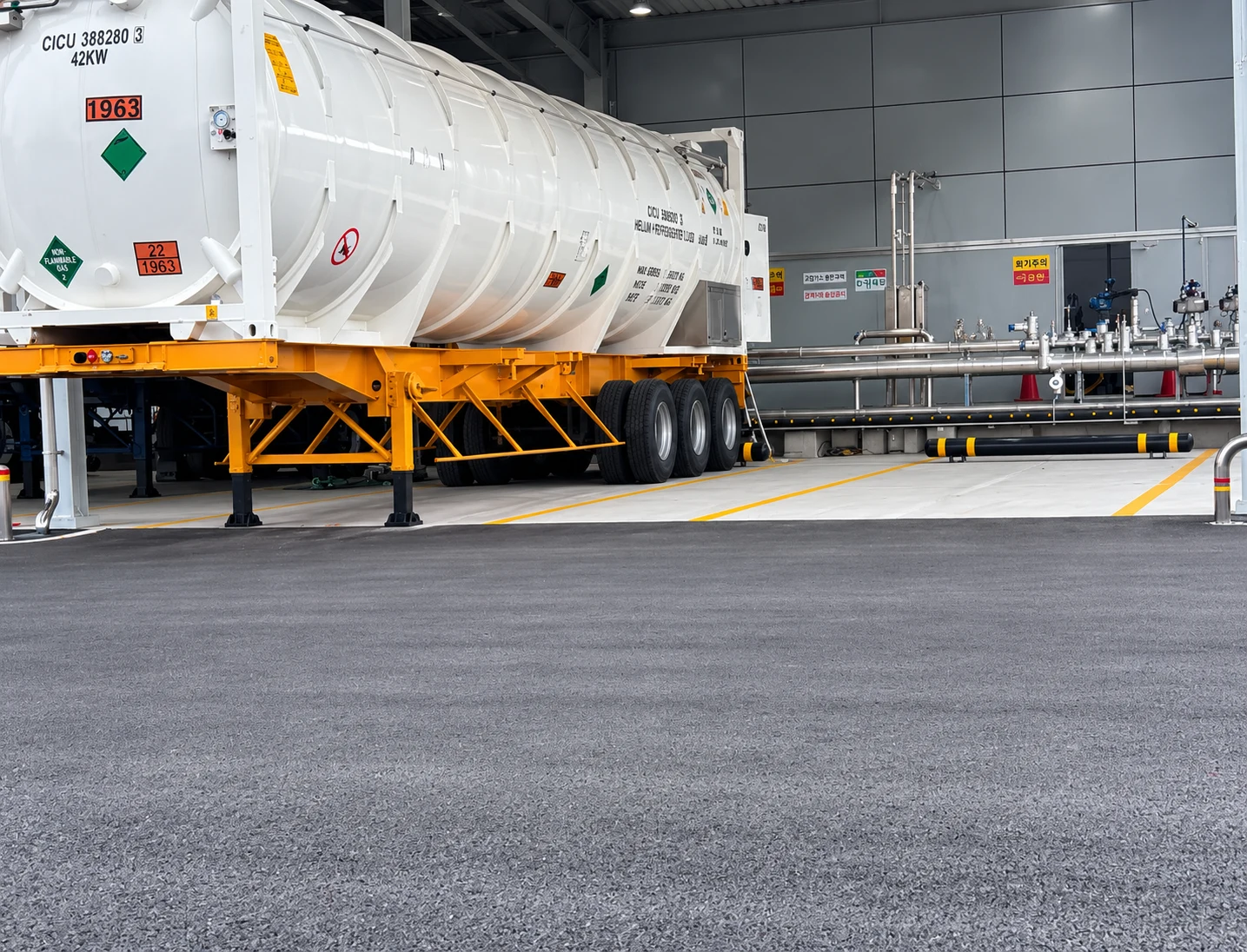
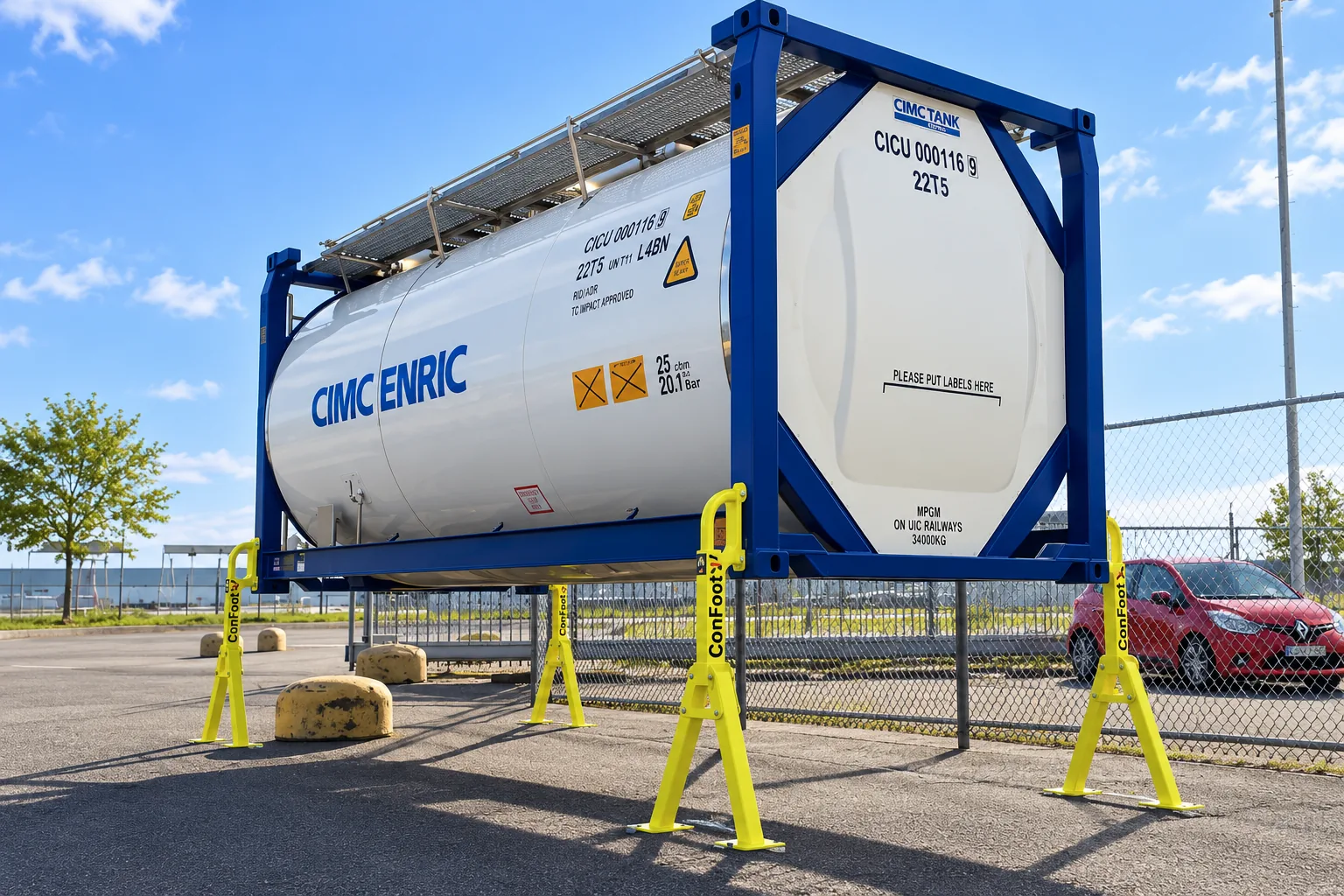
Bulk cryogenic format
A bulk liquid-gas movement must be planned around the container specification, usable quantity, pressure condition, transfer connection, journey time and destination equipment. Review the applicable supply context for liquid helium and liquid argon.
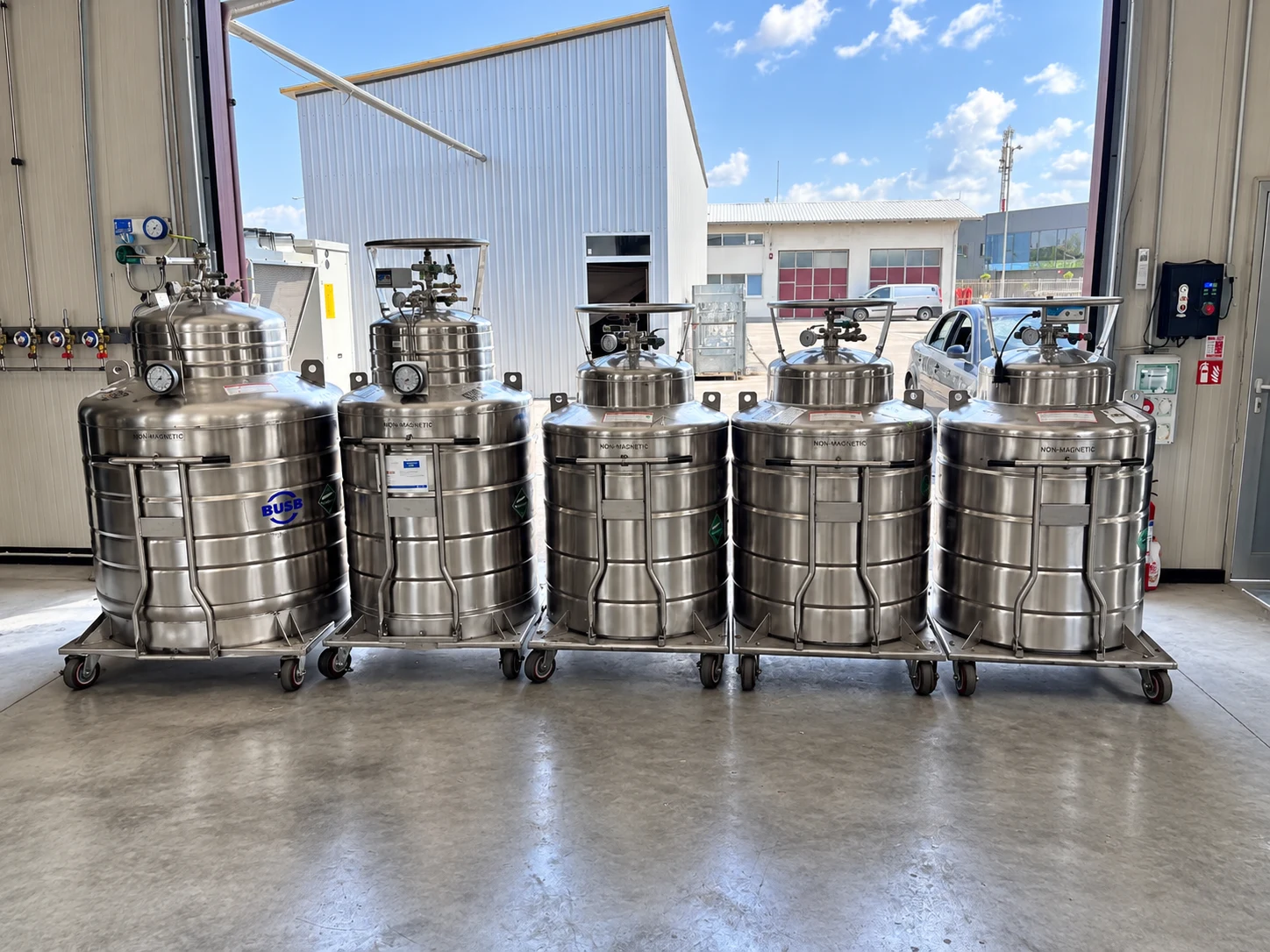
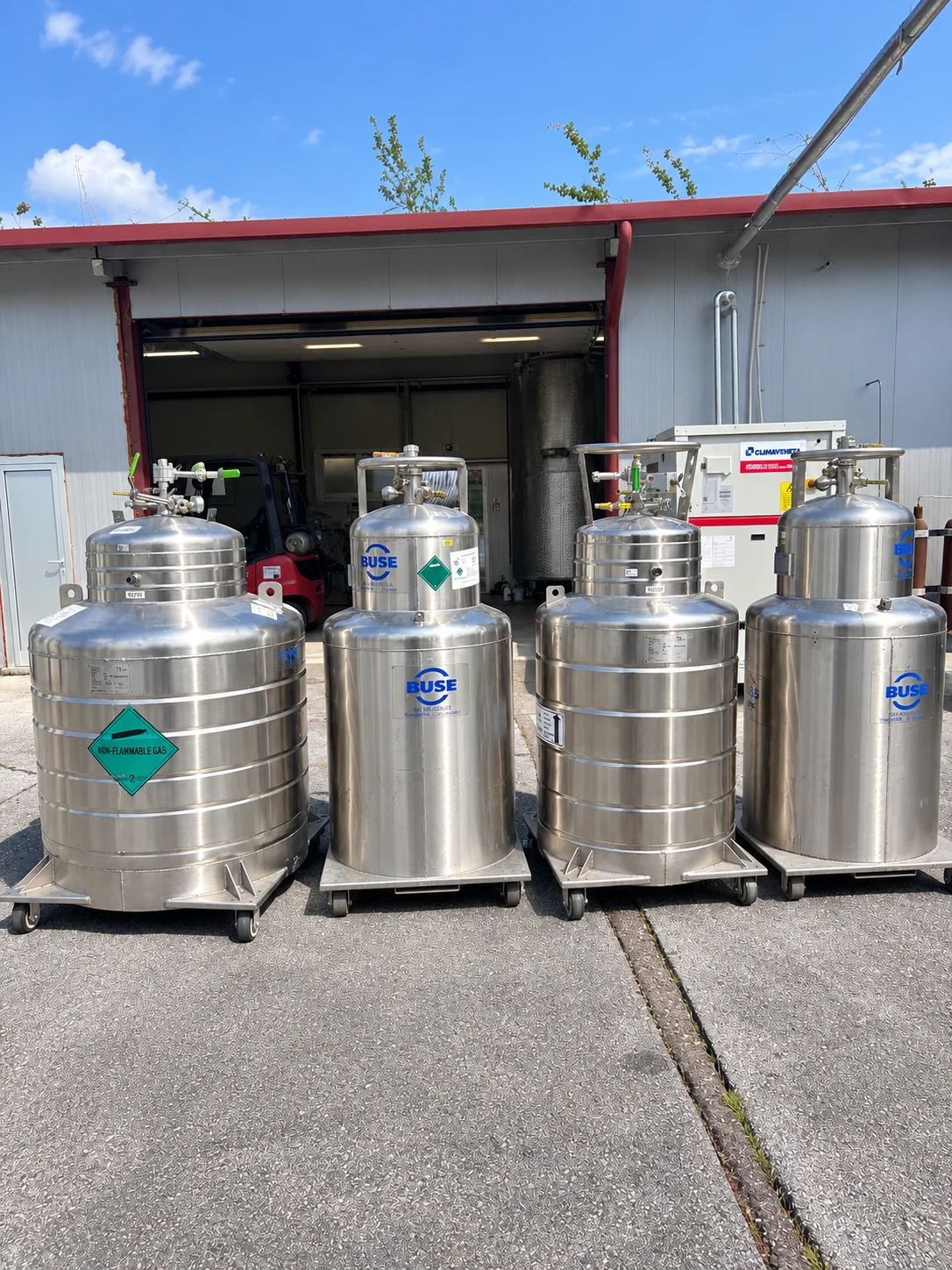
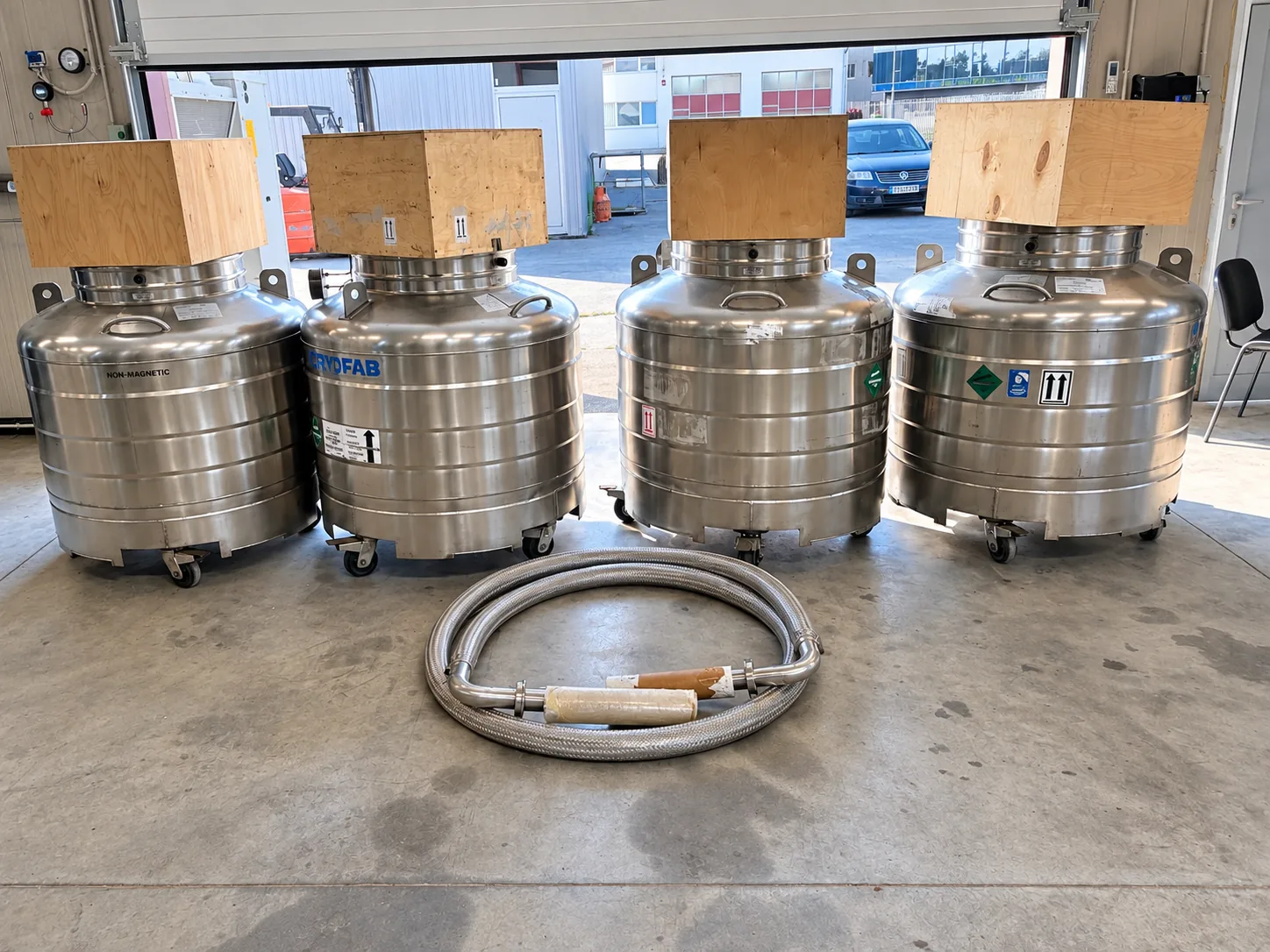
Transportable insulated vessels are matched to the required quantity, pressure, connection, route and receiving conditions. See the liquid helium supply formats for the product-side requirements.
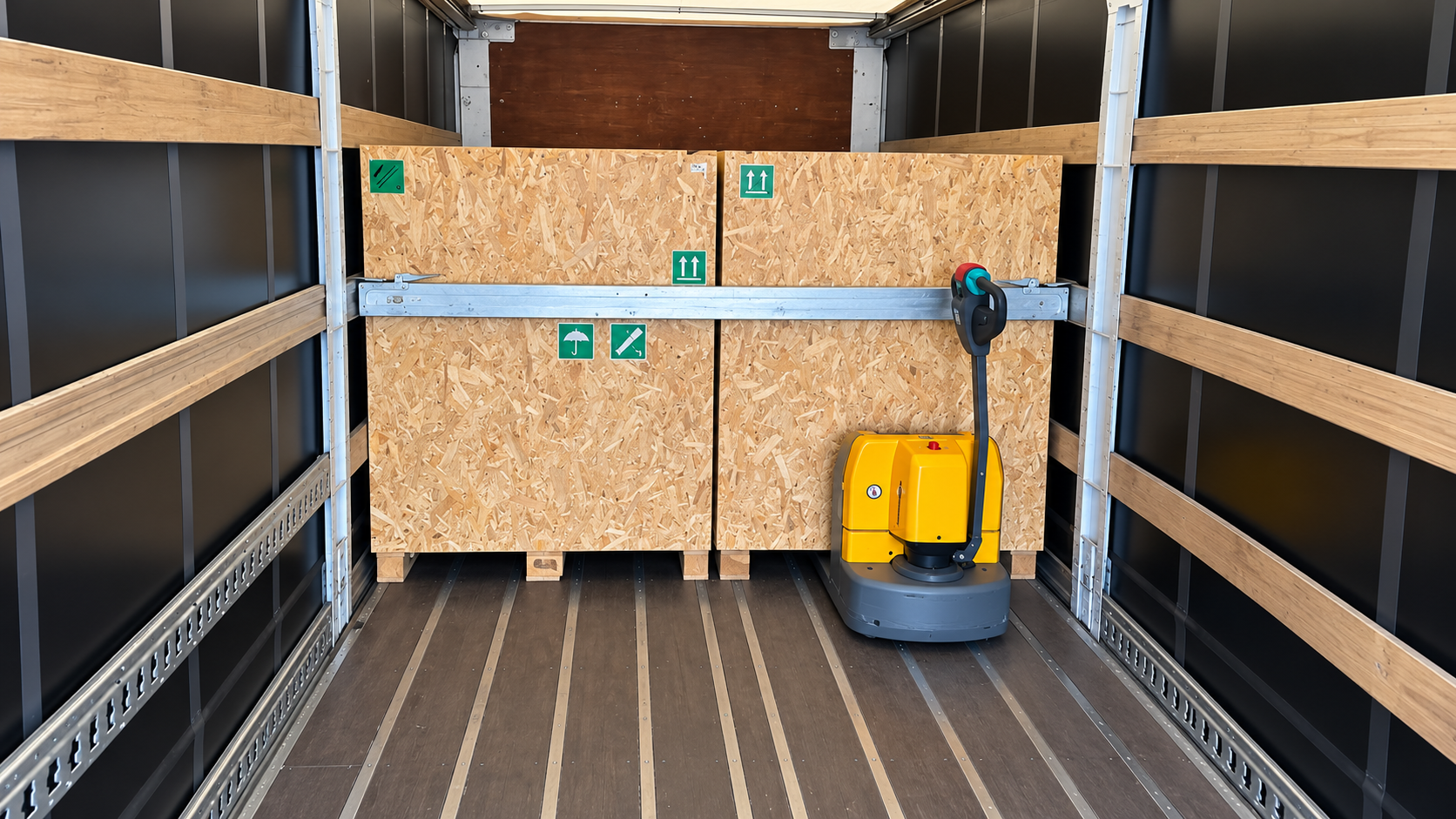
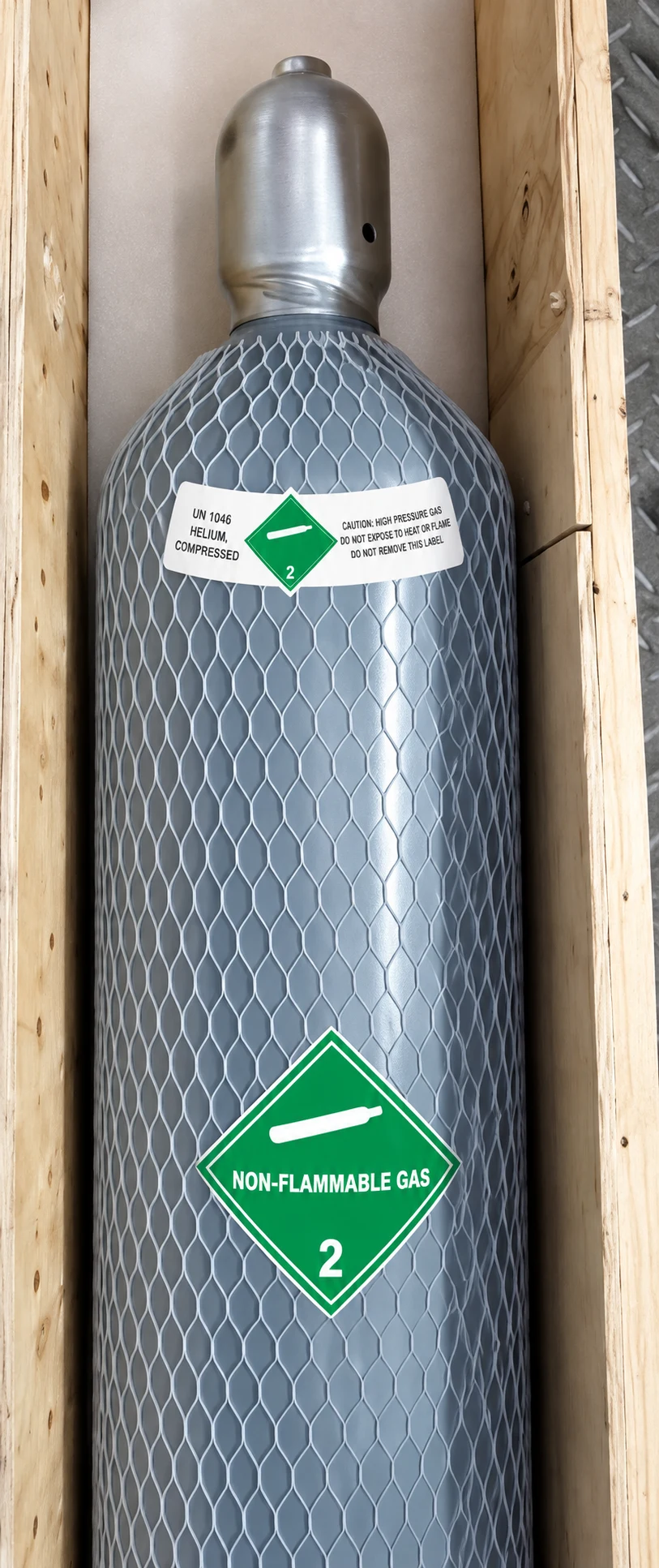
Crates and securing arrangements are part of the shipment preparation. This view shows protective packaging; the Dewar vessels themselves are not visible inside the crates.
Package dimensions, handling access and transport requirements are reviewed for the planned route.
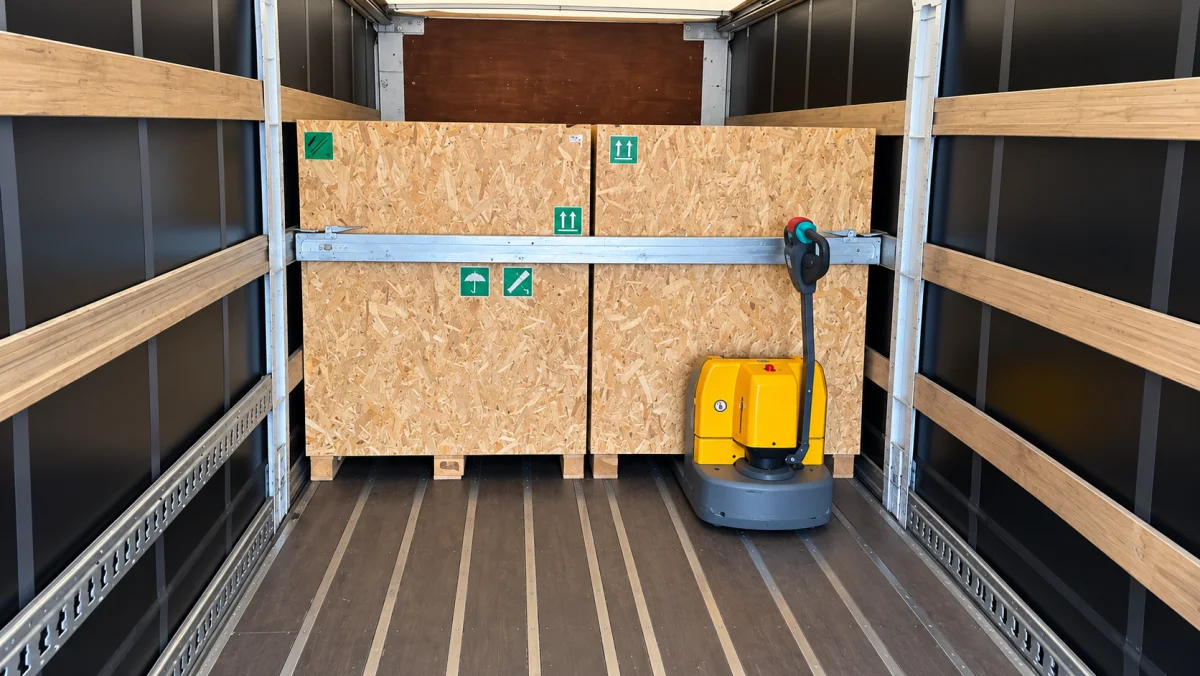
Protective packaging for Dewar vessel dispatch
The photographs illustrate transportable cryogenic vessel formats. Availability and final suitability are confirmed for each request.
For the engineering background, read vacuum, MLI and thermal shields. For delivery planning, the liquid-helium losses guide separates retained helium mass from usable liquid at receipt.
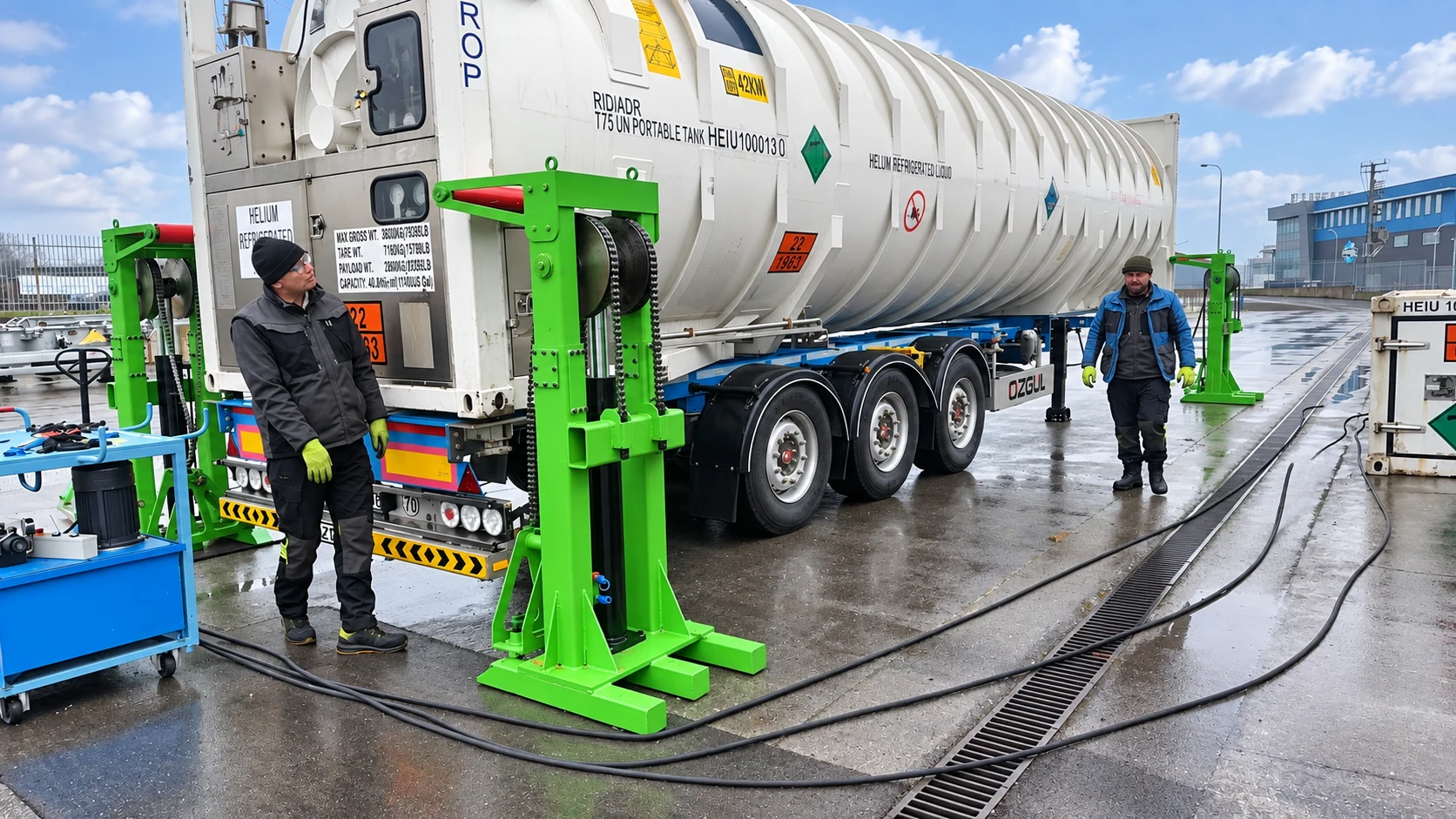
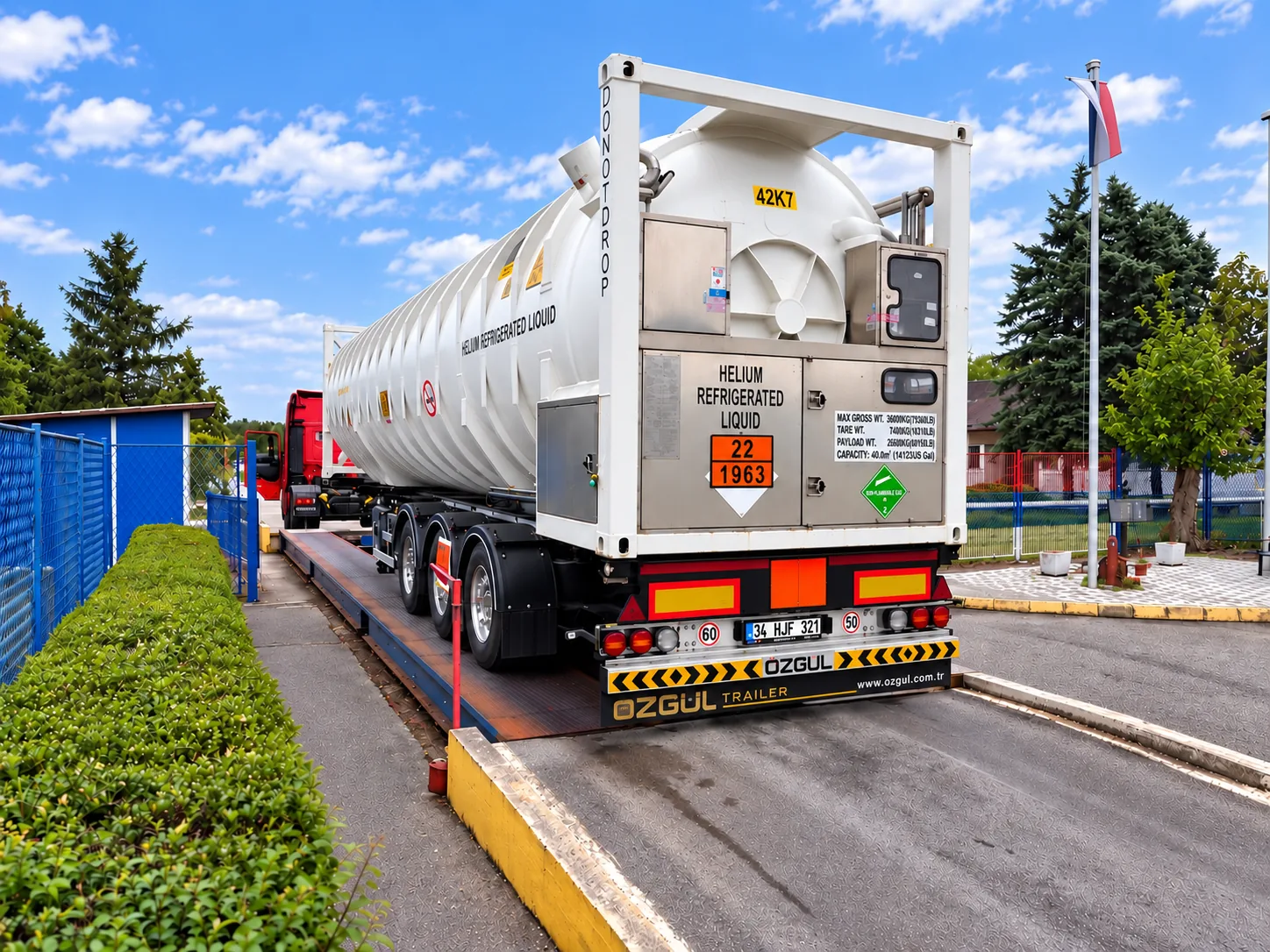
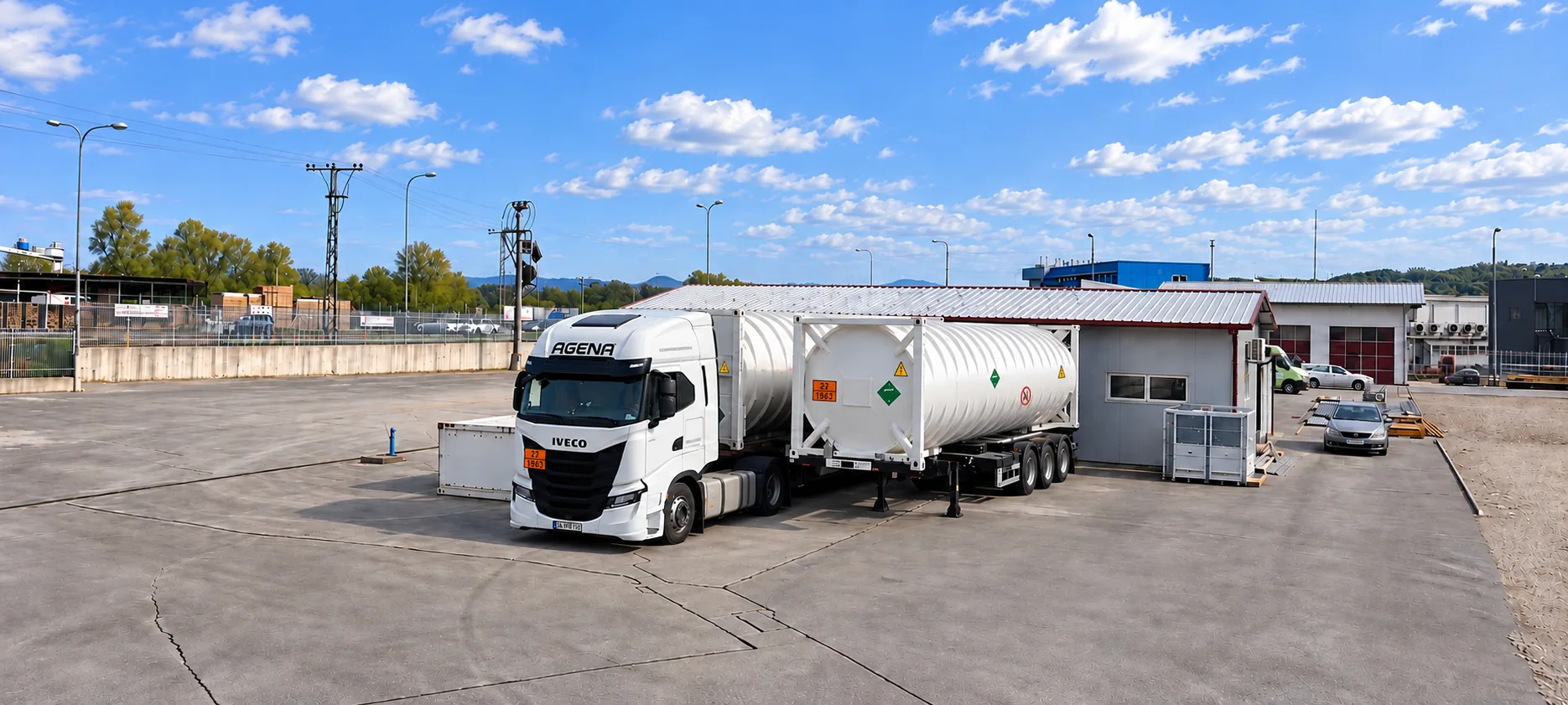
Each movement needs a documented plan that connects the container, route, handling method and receiving site.
The photograph illustrates a handling operation. Final methods, equipment and responsibilities are confirmed for each movement and site.
Connected supply
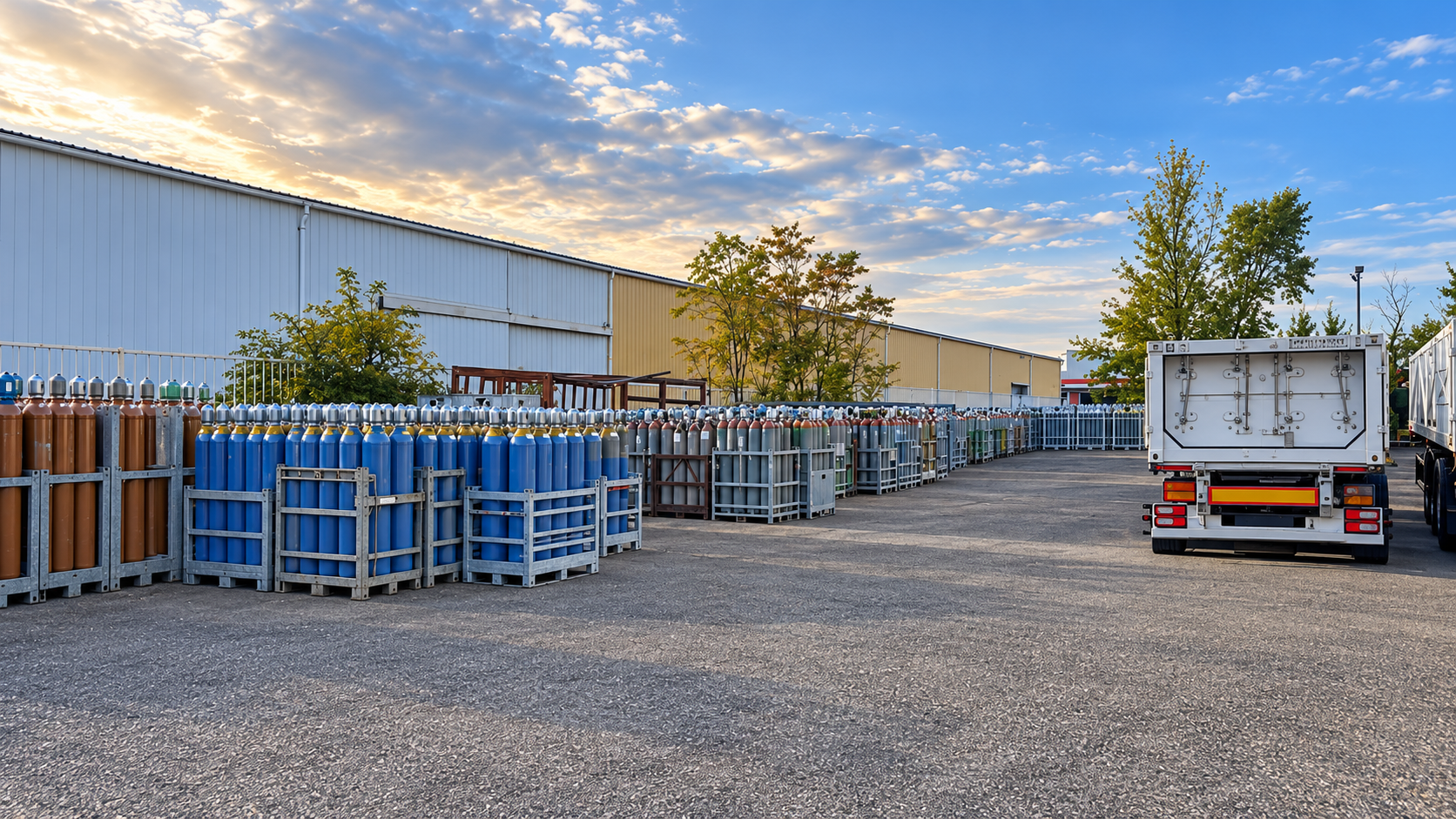
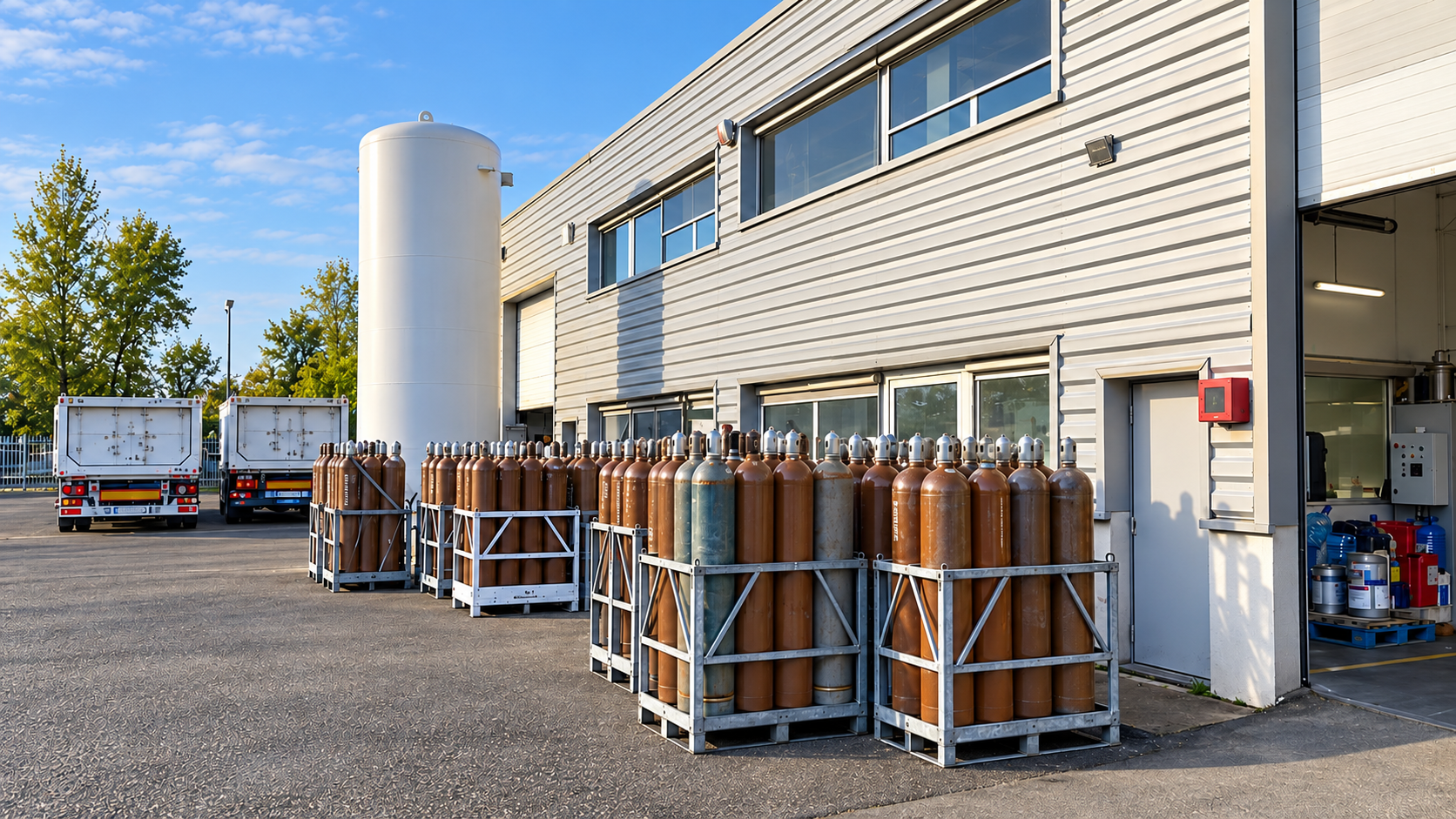
Manifolded bundles support centralized withdrawal, while individual cylinders can be protected and prepared as product-specific shipment lots.
Planning to use an existing cylinder for a different gas? Read our guide to changing cylinder gas service before requesting a specialist review.
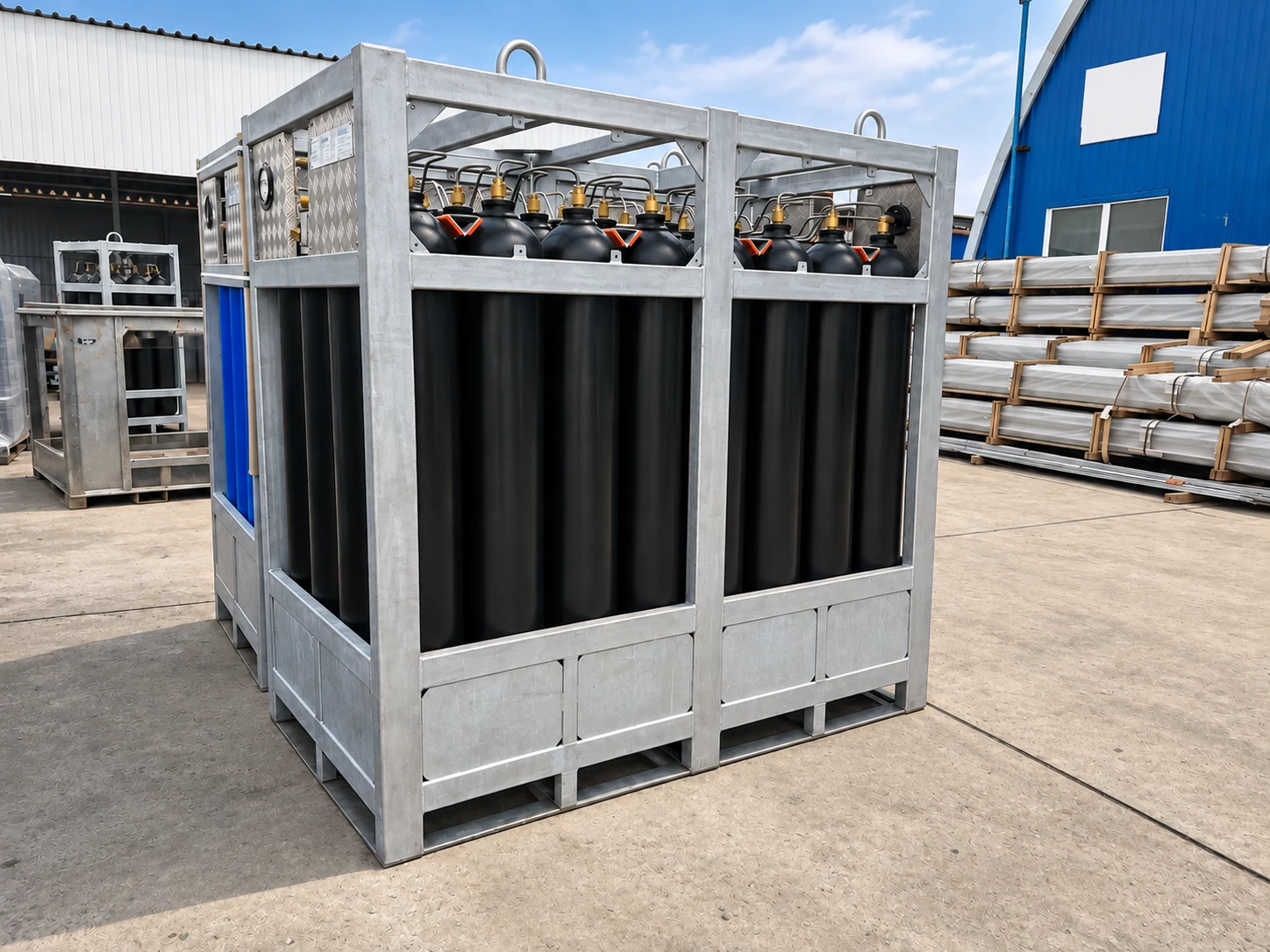
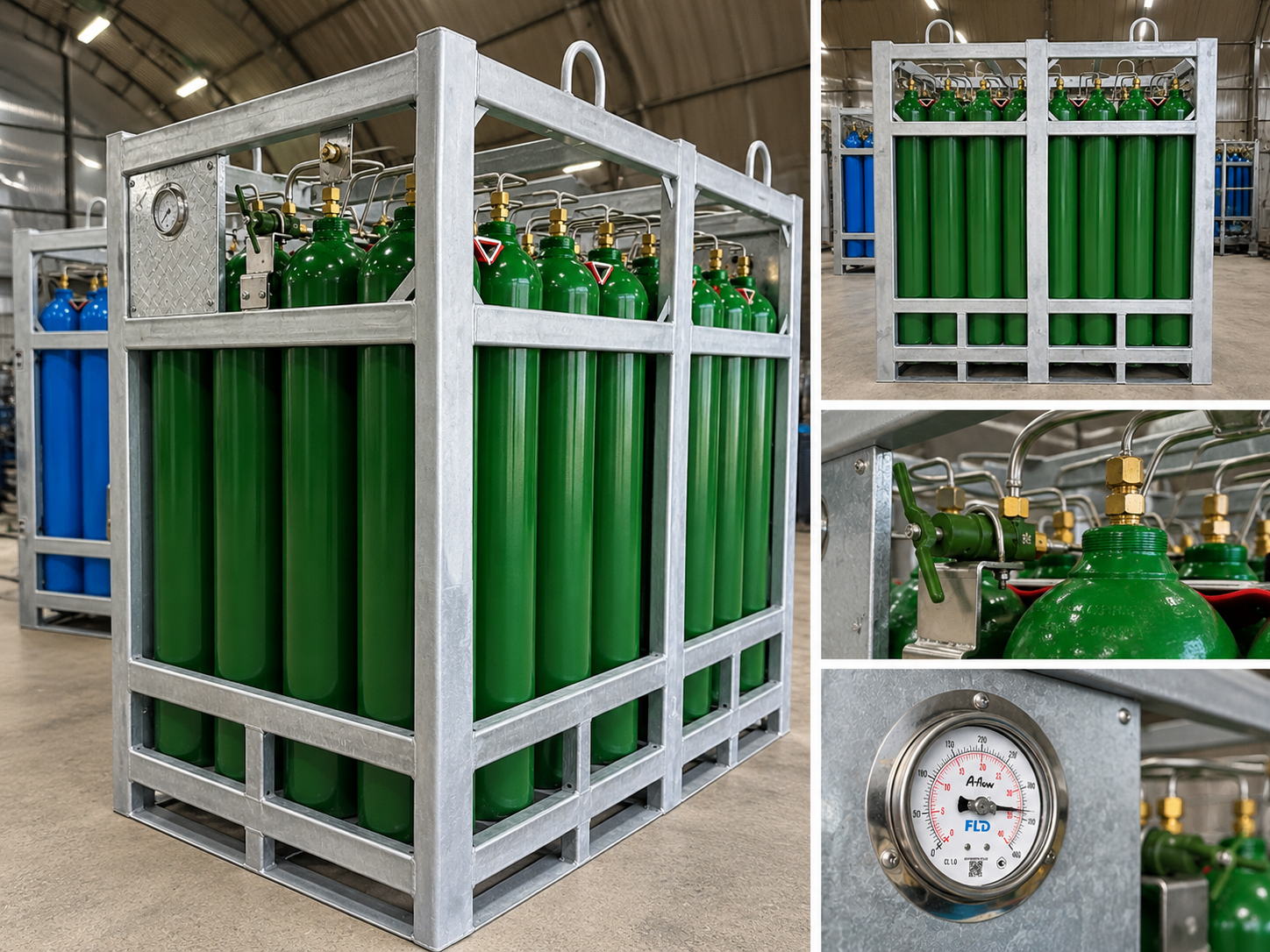
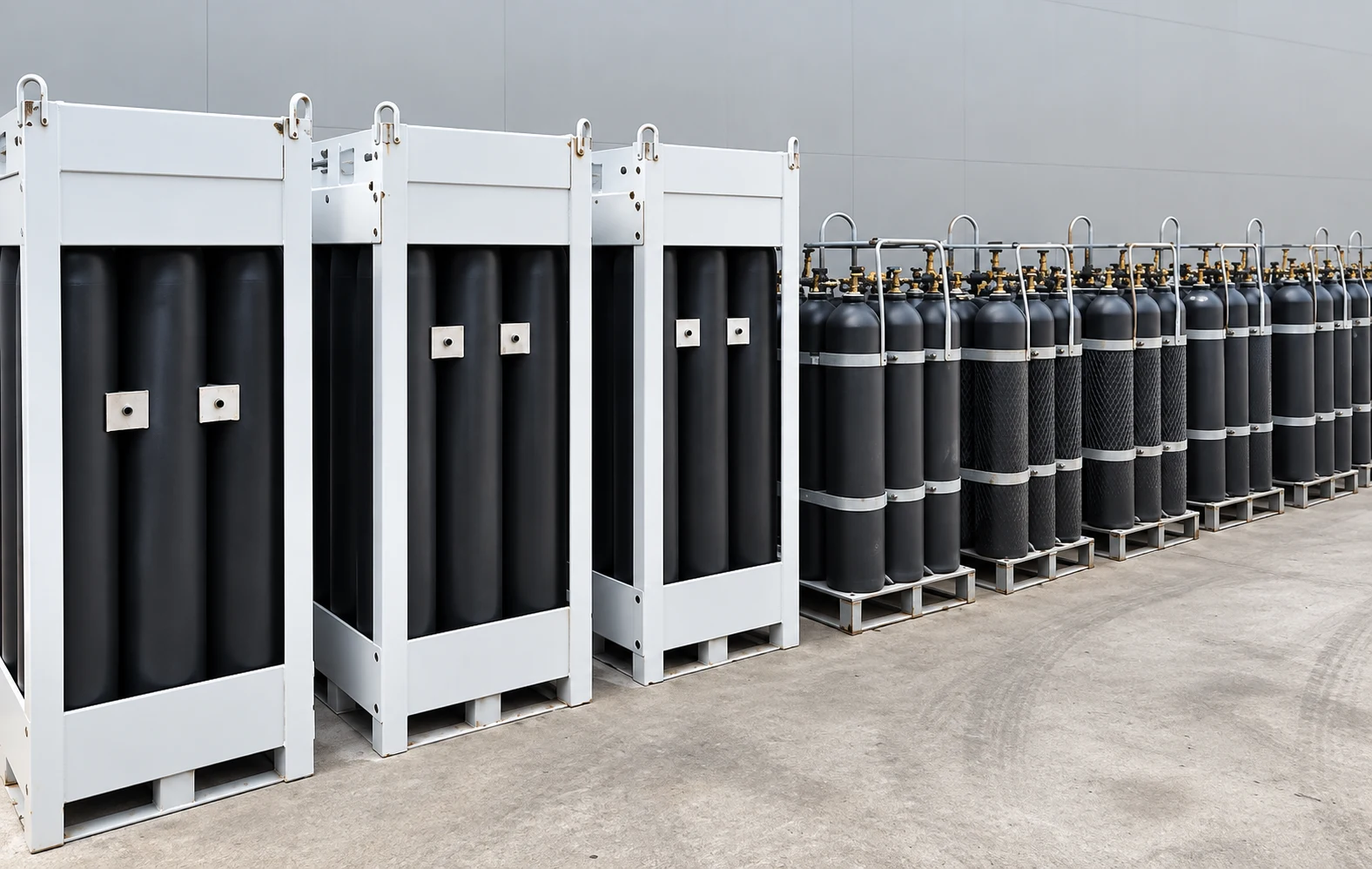
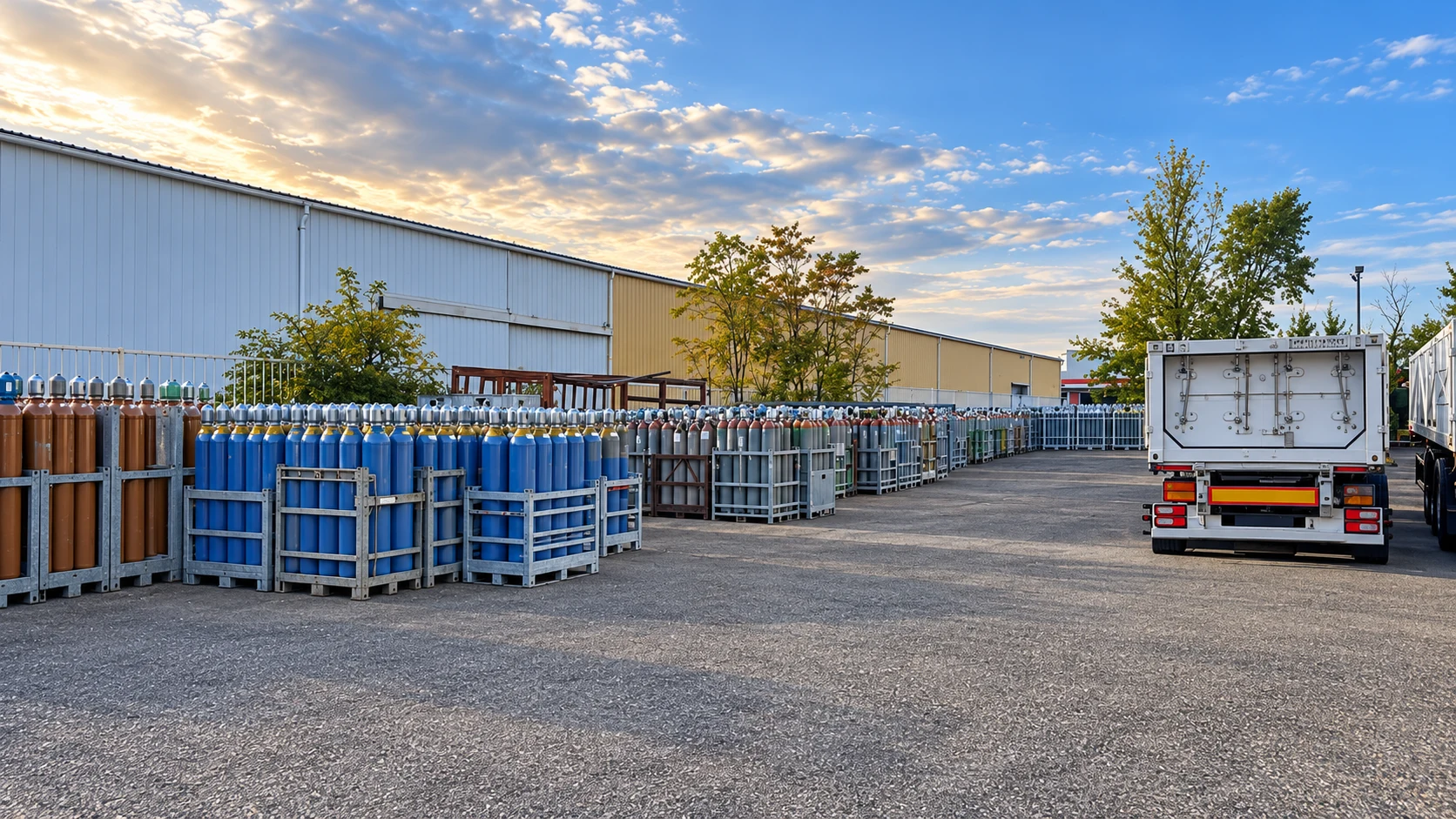
Gas cylinders in transport racks at an industrial site.
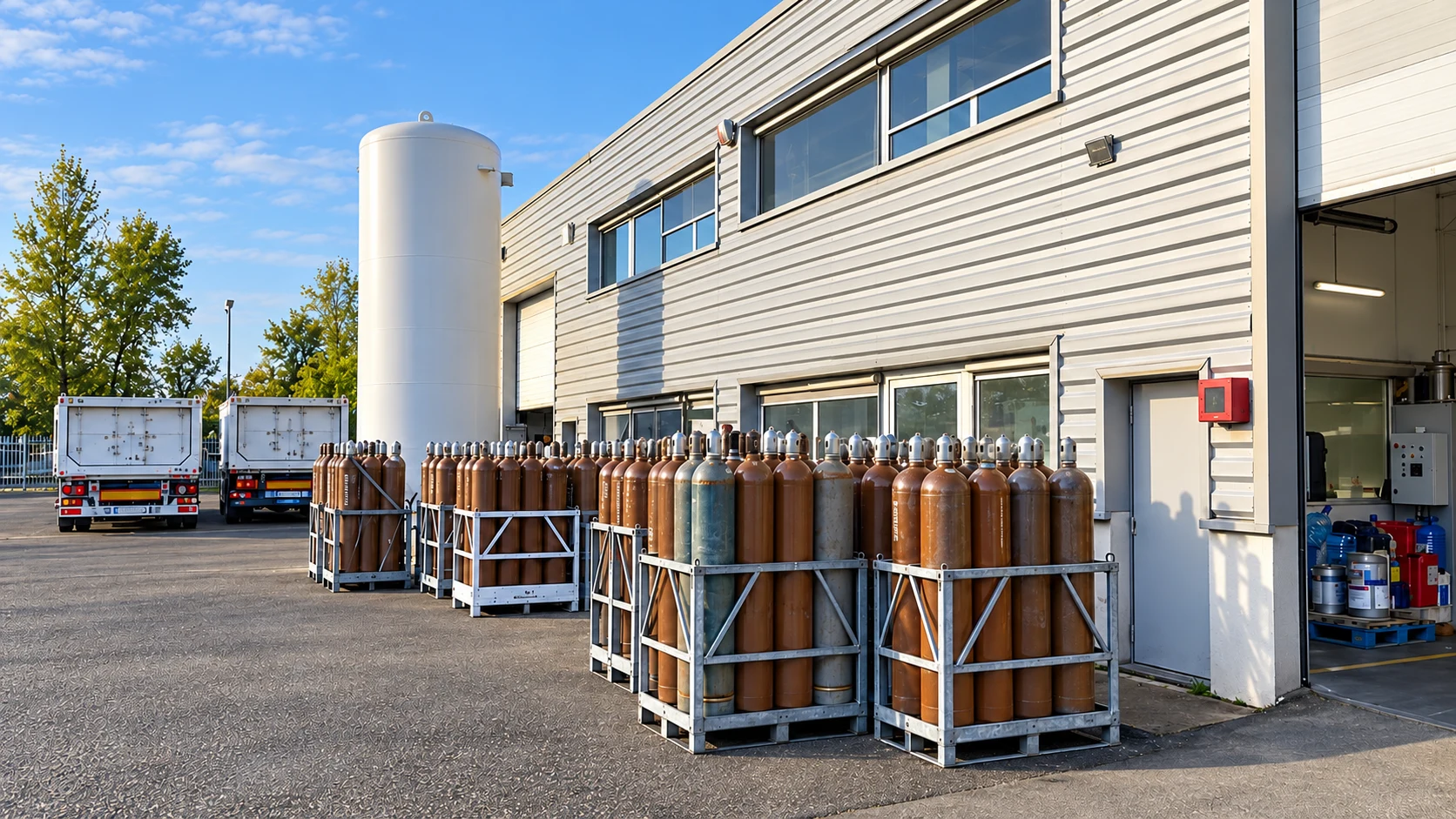
Cylinder transport racks beside an industrial building.
High-volume gaseous supply
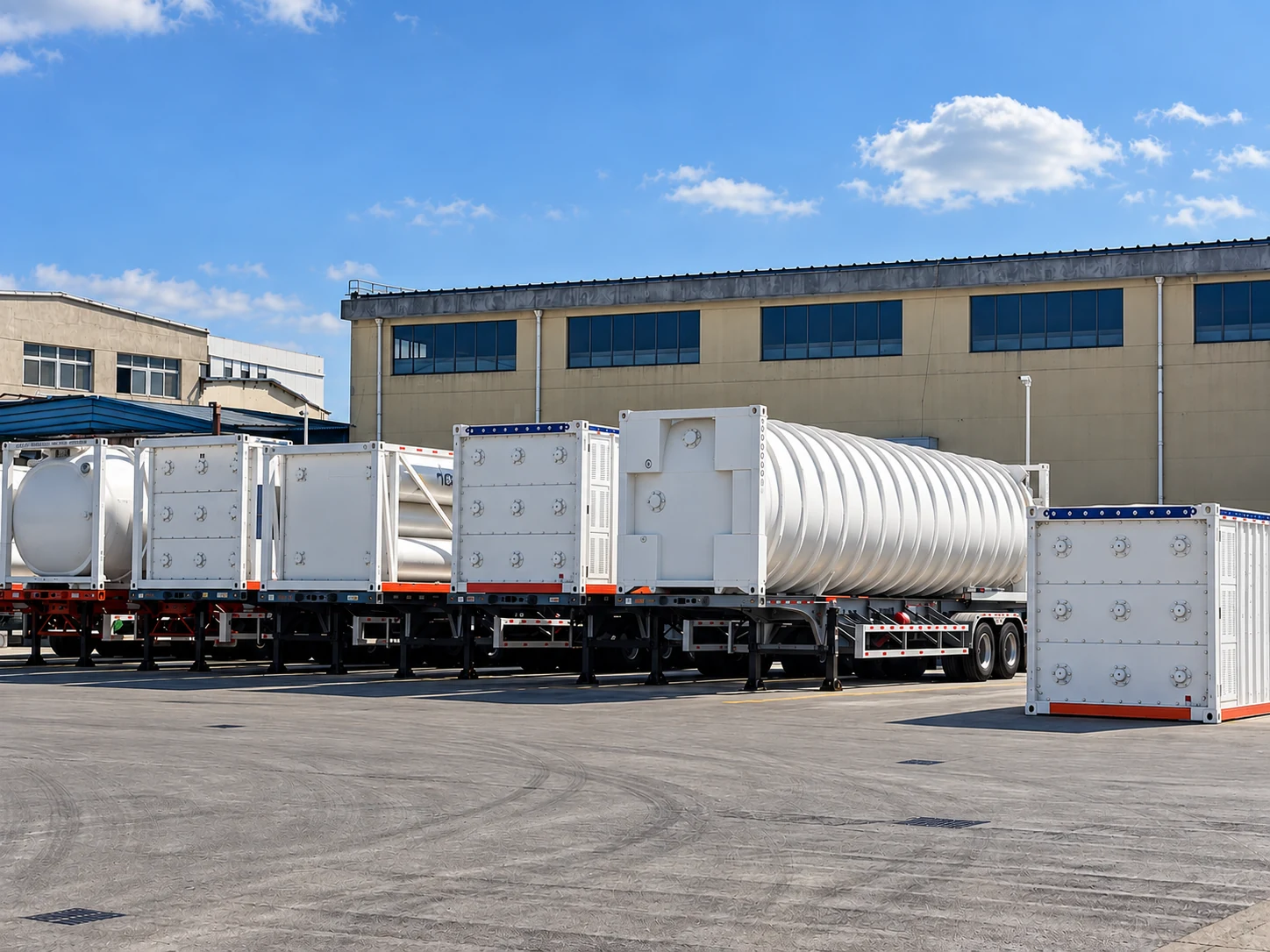
Mobile trailers and containerized tube modules can support larger gaseous requirements when the product, pressure, receiving installation and route are suitable. Current enquiry paths include neon, helium, SF6 and SiH4, each subject to its product-specific review.
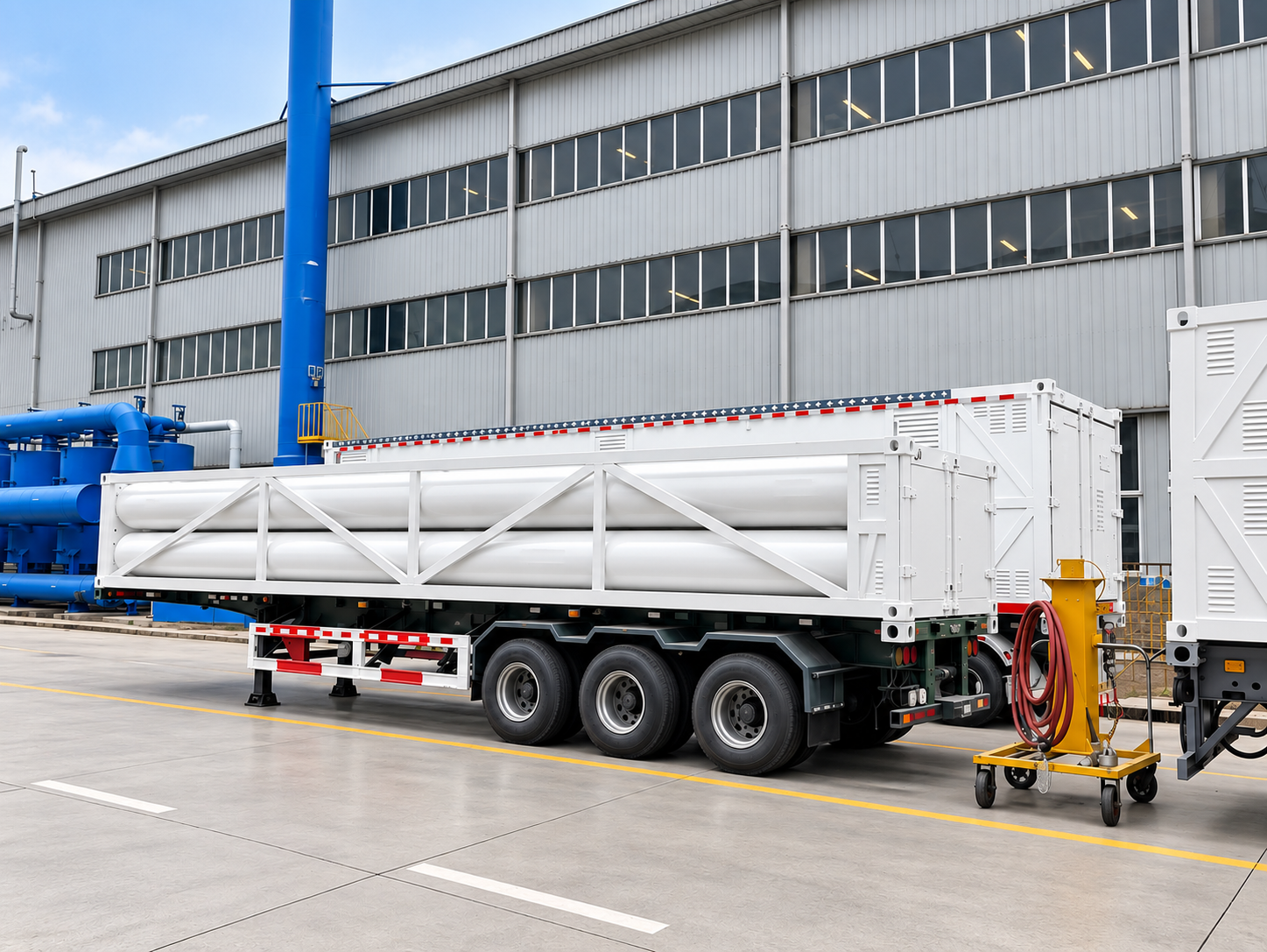
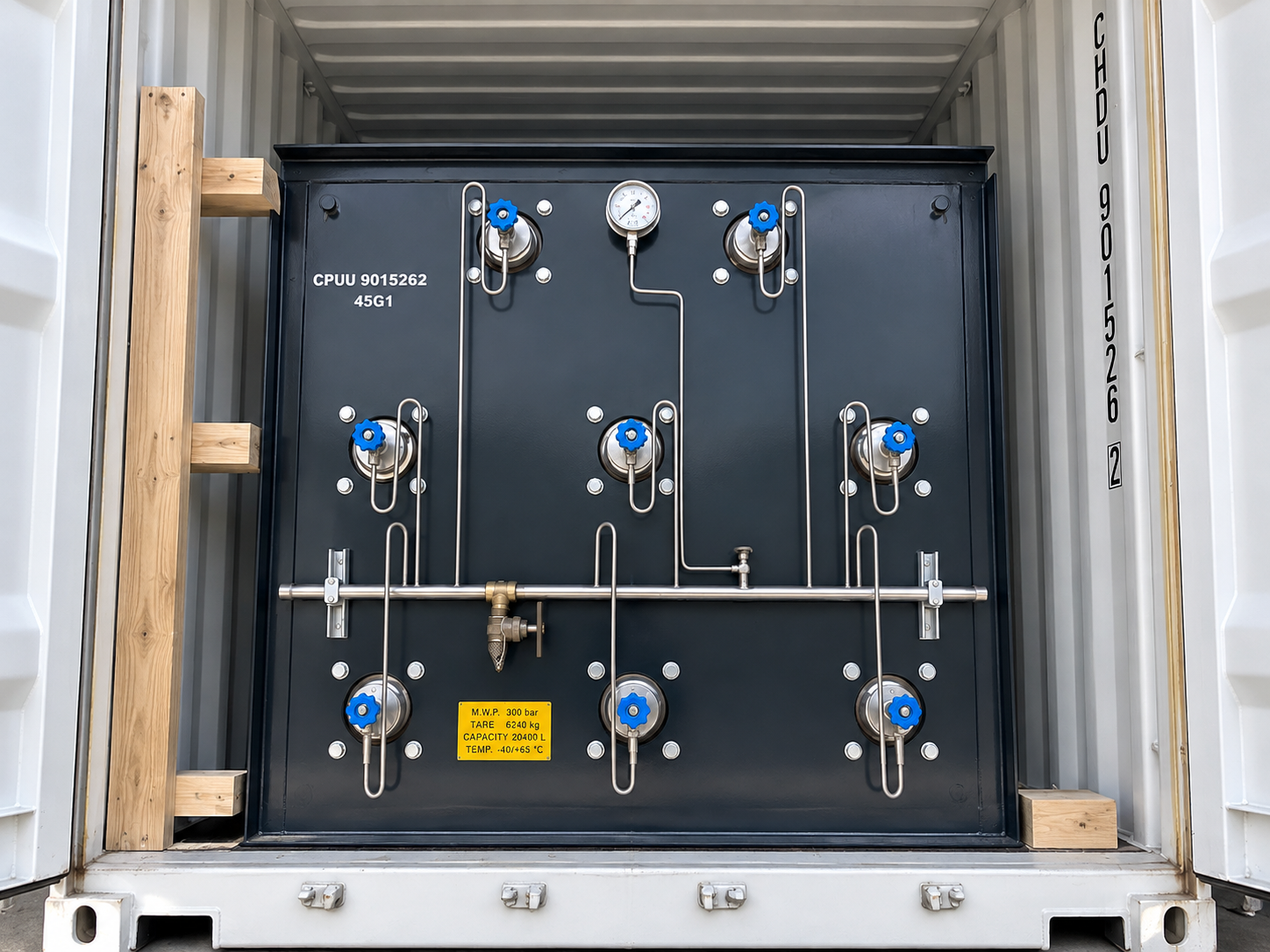
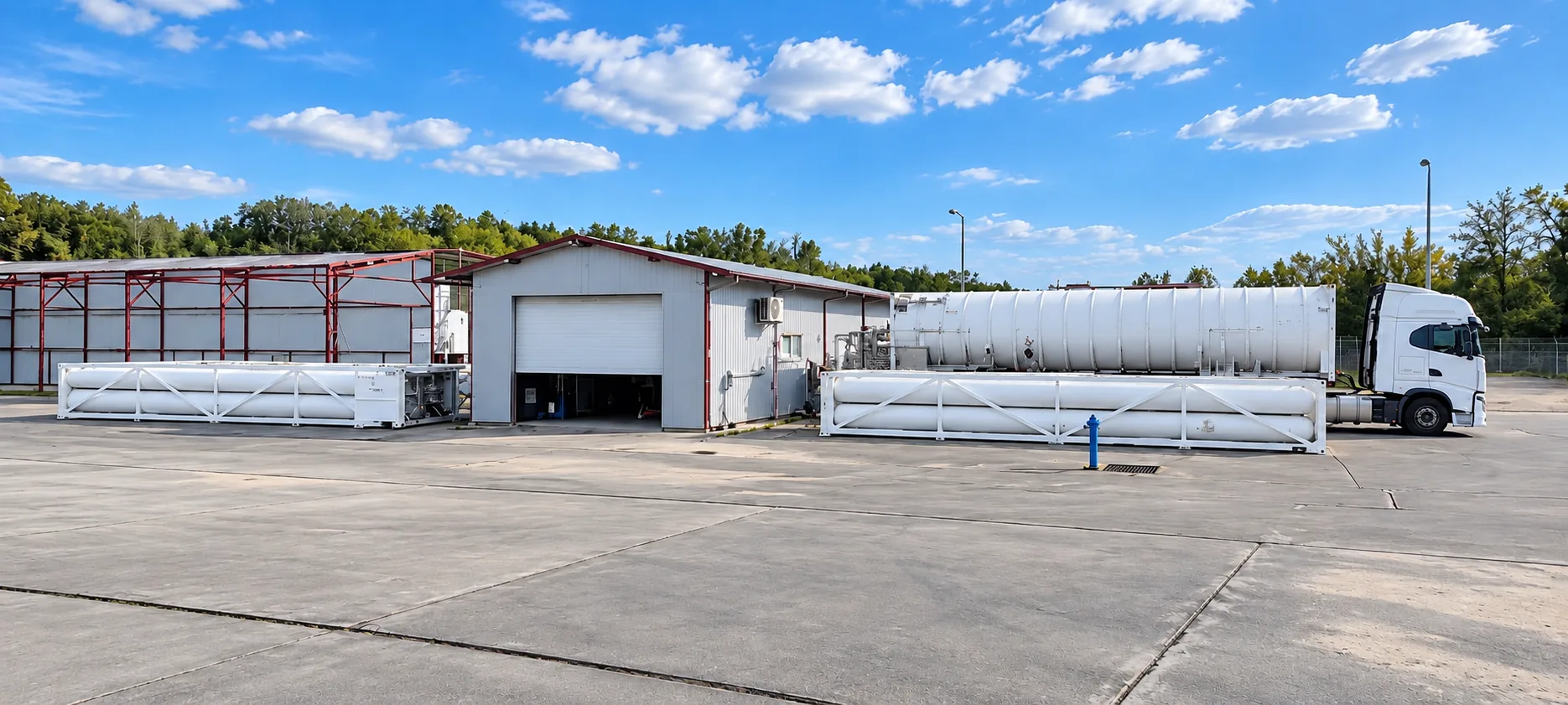
The photographs illustrate equipment and operating contexts. Availability, allowable filling pressure, capacity, connections and transport configuration are confirmed for each gas, destination and receiving site.
For measurement applications, specify composition and package together in your calibration gas enquiry.
Time-critical logistics
Where air transport is appropriate, we coordinate the shipment context around the gas, vessel, protective packaging, documentation and receiving requirements.
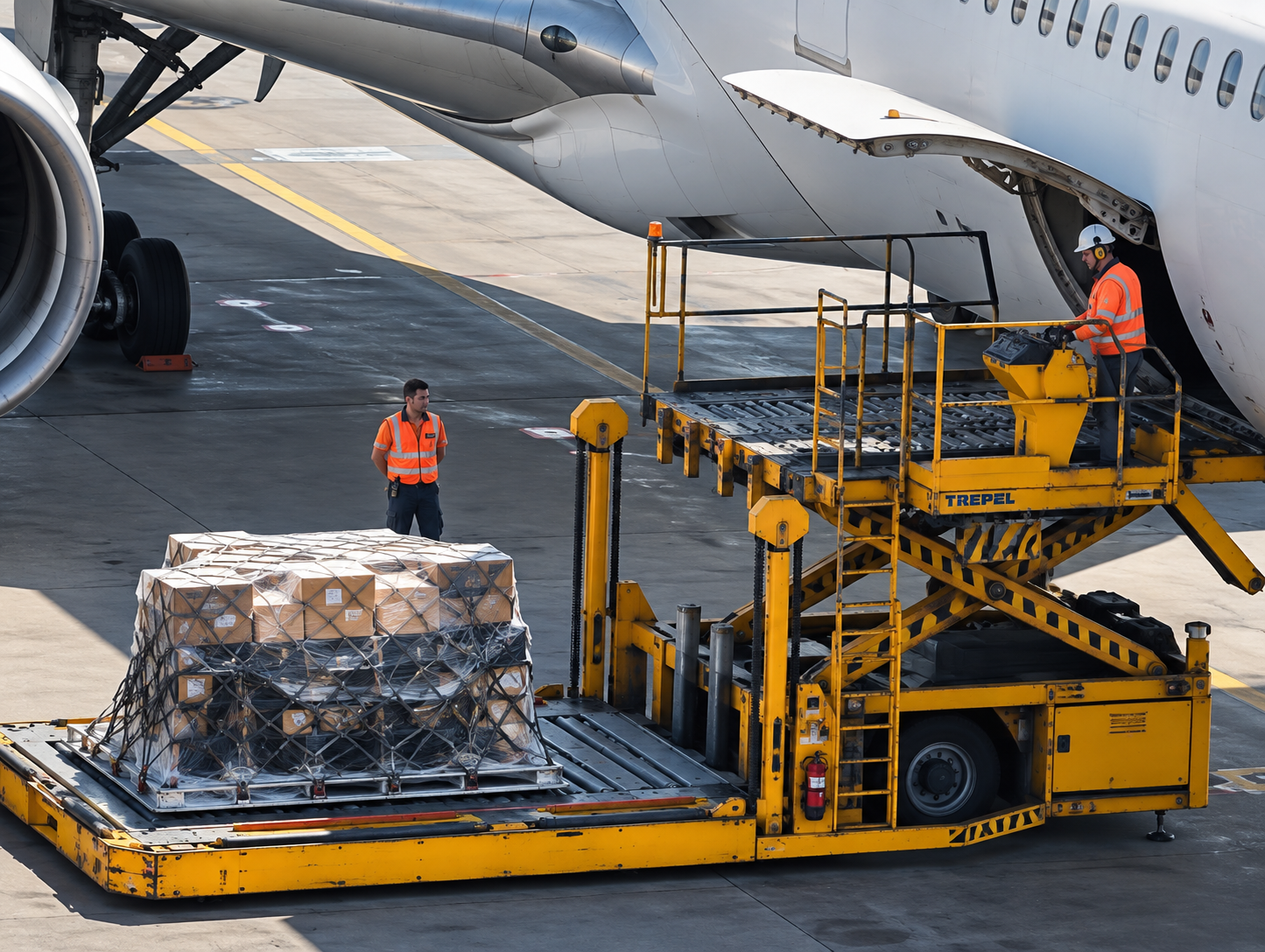
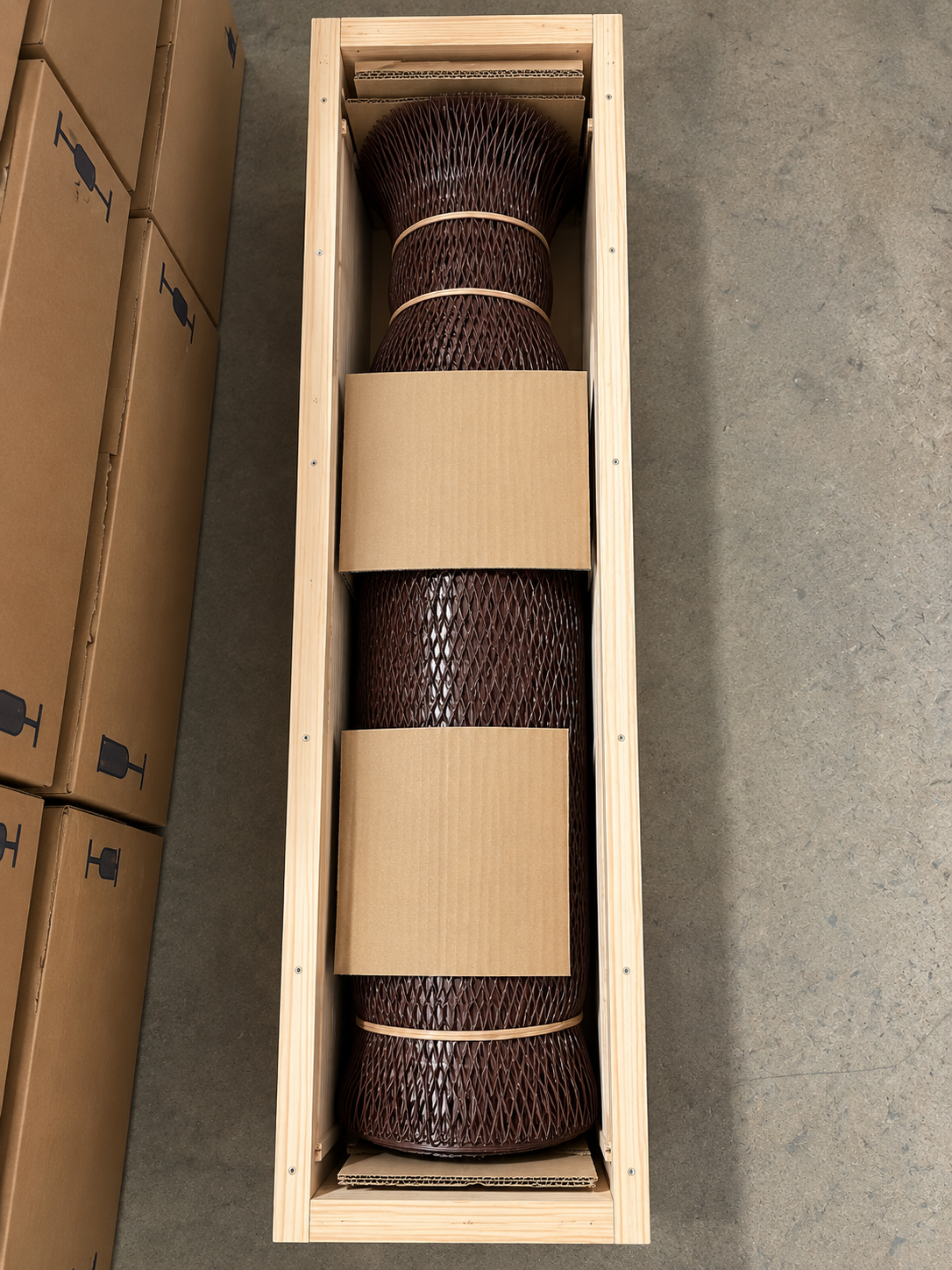
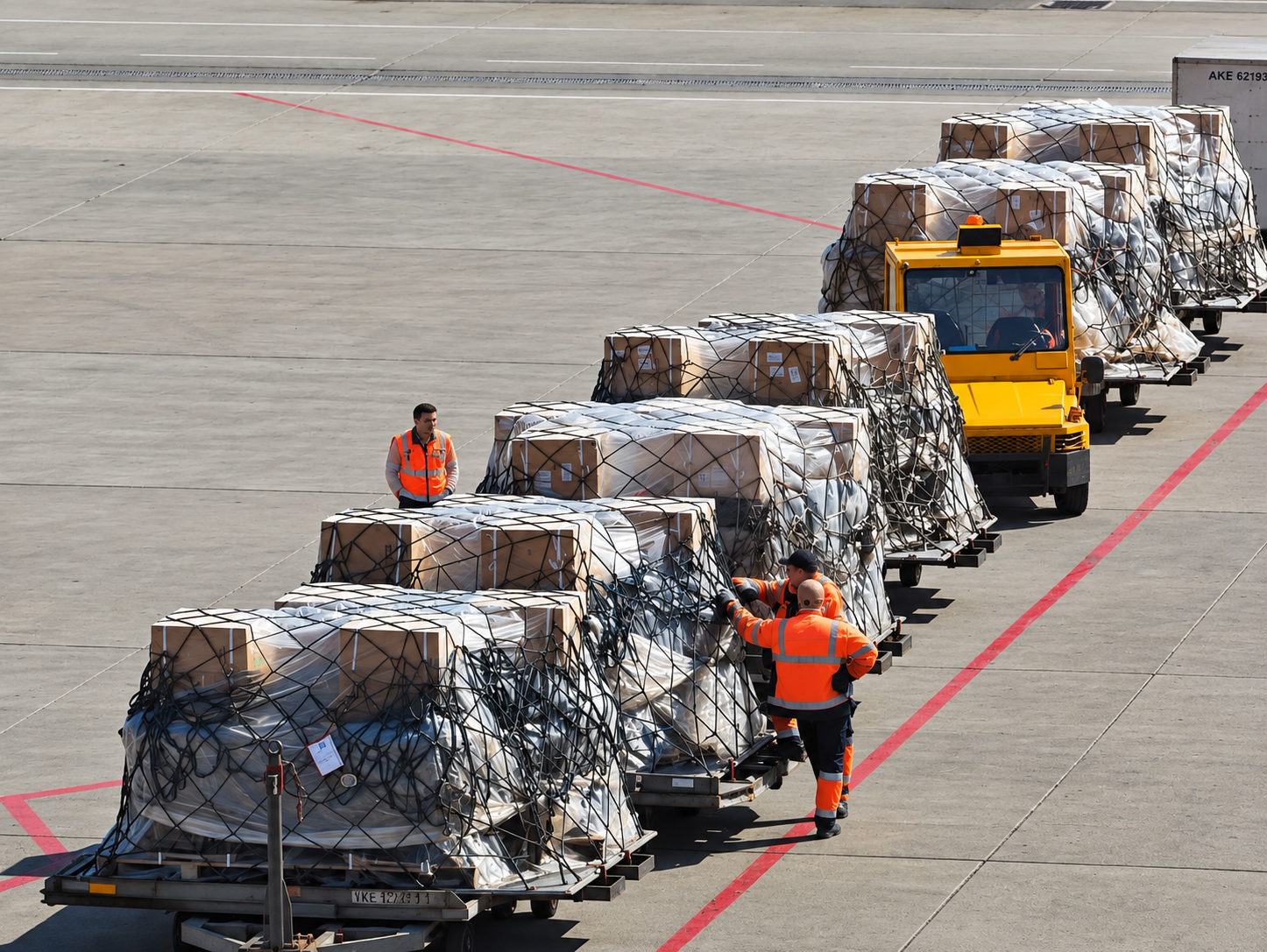


Share the gas composition, vessel or cylinder data, pressure state, origin, destination and required date for a route review.
Request a logistics reviewThe same gas may require different handling and documentation depending on its state and destination.
One-time, recurring, bulk or small-volume need.
Gaseous or liquid format.
Valve, pressure and handling context.
Transport mode and destination access.
Safety, quality and transport requirements.
For package preparation, browse the free printable dangerous goods labels and marks. Confirm the material, package and route requirements against the current SDS before use.
Share the product, purity, quantity, destination and timing. We will review the practical options.
Planning a quantity? Use Gas Calc for ordinary-gas mass and reference-volume estimates, and read the guide to litres, kilograms and reference conditions. Enriched isotopes and mixtures require separate data.