
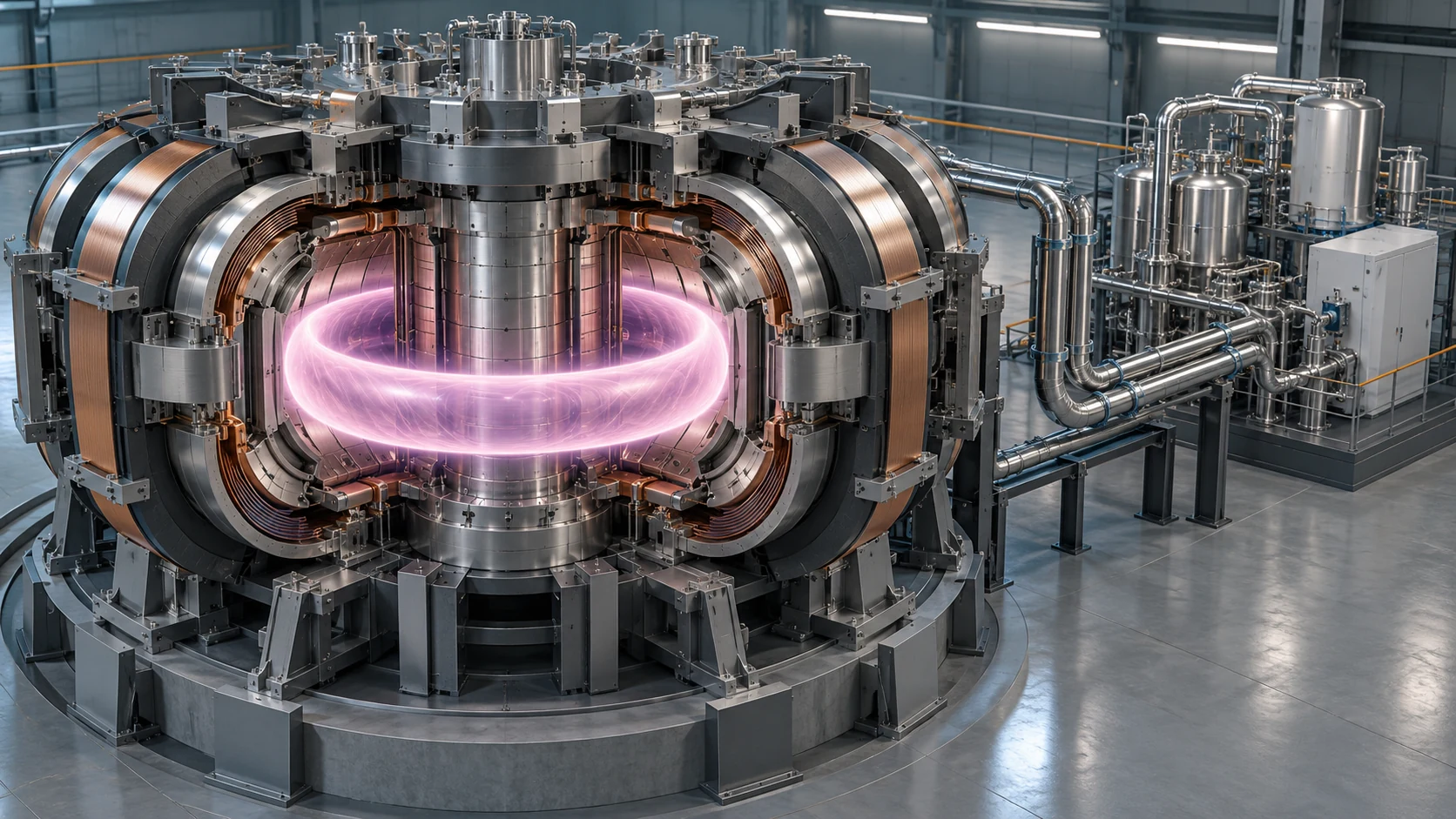
Fusion development is producing concrete engineering milestones: installing cryostats, commissioning refrigeration and testing superconducting magnets. For the industrial-gas sector, these activities highlight the importance of helium quality, recovery and reliable cryogenic infrastructure.
What the latest milestones show
On 21 May 2026, ITER announced that its Magnet Cold Test Facility was operational after the first coil was cooled to 4 K, approximately −269°C. The facility uses ITER’s helium refrigeration infrastructure to test magnets before their installation.
In a further update dated 1 October 2026, ITER reported that toroidal field coil #17 had completed testing to 34 kA and was beginning to warm up. These are equipment-qualification milestones; they do not demonstrate commercial electricity generation.
China’s BEST project provides another example of the hardware involved. In an announcement dated 1 October 2025, the Hefei Institutes of Physical Science reported delivery and positioning of its Dewar base. This was a major assembly step for the experimental facility, rather than the start of power production.
Cooling, fuel and fusion products
The word “helium” can describe different roles in a fusion project:
- Helium for refrigeration: ITER specifies forced-flow supercritical helium at around 4 K for its superconducting magnets and cryopumps. Its cryogenic system includes storage and recovery of the helium inventory.
- Helium produced by fusion: ITER’s fuel is deuterium and tritium, both hydrogen isotopes. Their reaction produces a helium-4 nucleus and a neutron. Helium ash leaves through the plasma-exhaust system; it is separate from the magnet-cooling circuit.
- Helium-3 as a fuel component: some developers pursue other fuel cycles. Helion describes a deuterium–helium-3 approach. This is a project-specific technology choice, not a fuel requirement shared by all fusion systems.
For purchasing, specify the isotope, chemical purity, intended function and delivery form separately. A request for cryogenic helium and a request for isotopically specified helium-3 require different technical review.
High-temperature superconductors still need cooling
“High-temperature” is relative to other superconducting materials. In the MIT/CFS SPARC Toroidal Field Model Coil test programme, a forced-flow supercritical-helium system provided cooling at a nominal 20 K, approximately −253°C. That is a different operating regime from ITER’s 4 K system, but it remains cryogenic.
This example also shows why a project’s helium cooling requirement cannot automatically be translated into a recurring liquid-helium delivery volume. The refrigeration design, initial inventory, recovery system and operating losses determine the actual supply requirement.
What a useful helium specification should include
As an engineering and procurement checklist, ask the project team to define:
- Function: refrigeration inventory, commissioning supply, laboratory use or an isotope-specific requirement.
- Quality: agreed impurity limits, analytical methods and acceptance criteria, with a batch Certificate of Analysis.
- Quantity: initial fill, reserve stock and expected make-up demand stated separately. Installed inventory is not annual consumption.
- Delivery interface: liquid or compressed supply, vessel ownership, receiving capacity, connections and return arrangements.
- Recovery: responsibility for collection, storage, analysis and any required re-purification of recovered gas.
- Schedule: commissioning stages, delivery windows and the consequences of a change in the test programme.
Engineering progress and commercial readiness
Cold tests and component installation provide evidence of engineering progress. They do not establish a universal date for commercial fusion, a guaranteed increase in helium demand or a future helium price. Supply planning should follow the requirements and programme of the specific facility.
For the cryogenic background, see how turboexpanders and heat exchangers work in a helium cycle and vacuum insulation and thermal shields. Our helium page, quality documentation and liquid-helium RFQ checklist help structure a supply enquiry.
Prepared on 29 October 2026 using dated project announcements and primary technical sources. The purchasing checklist is SG Trading’s explanatory guidance. Project references do not imply a supply relationship with SG Trading.